

15th-Century Lombard Armet
Armour B4 from the Grazie in Mantua
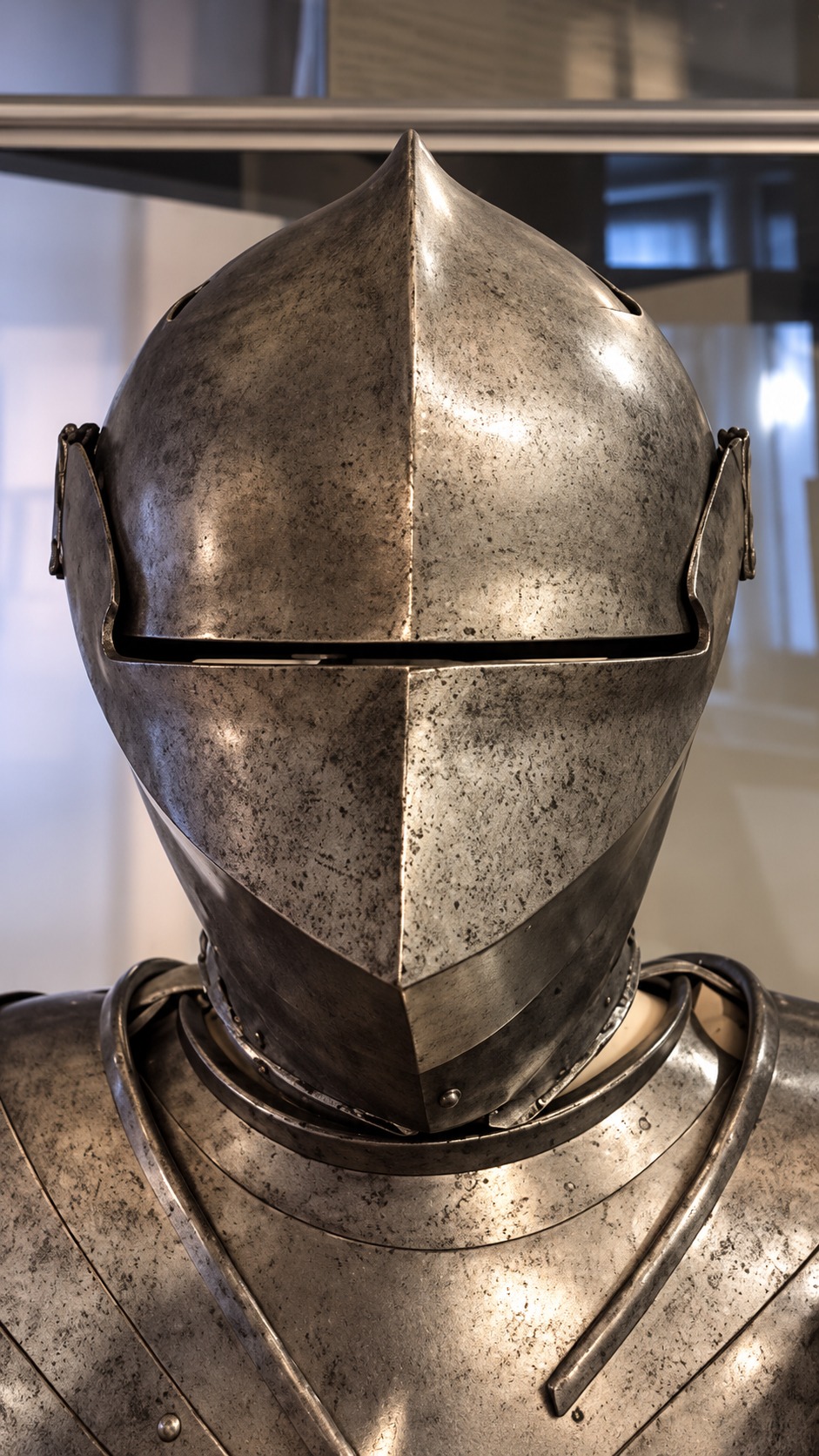
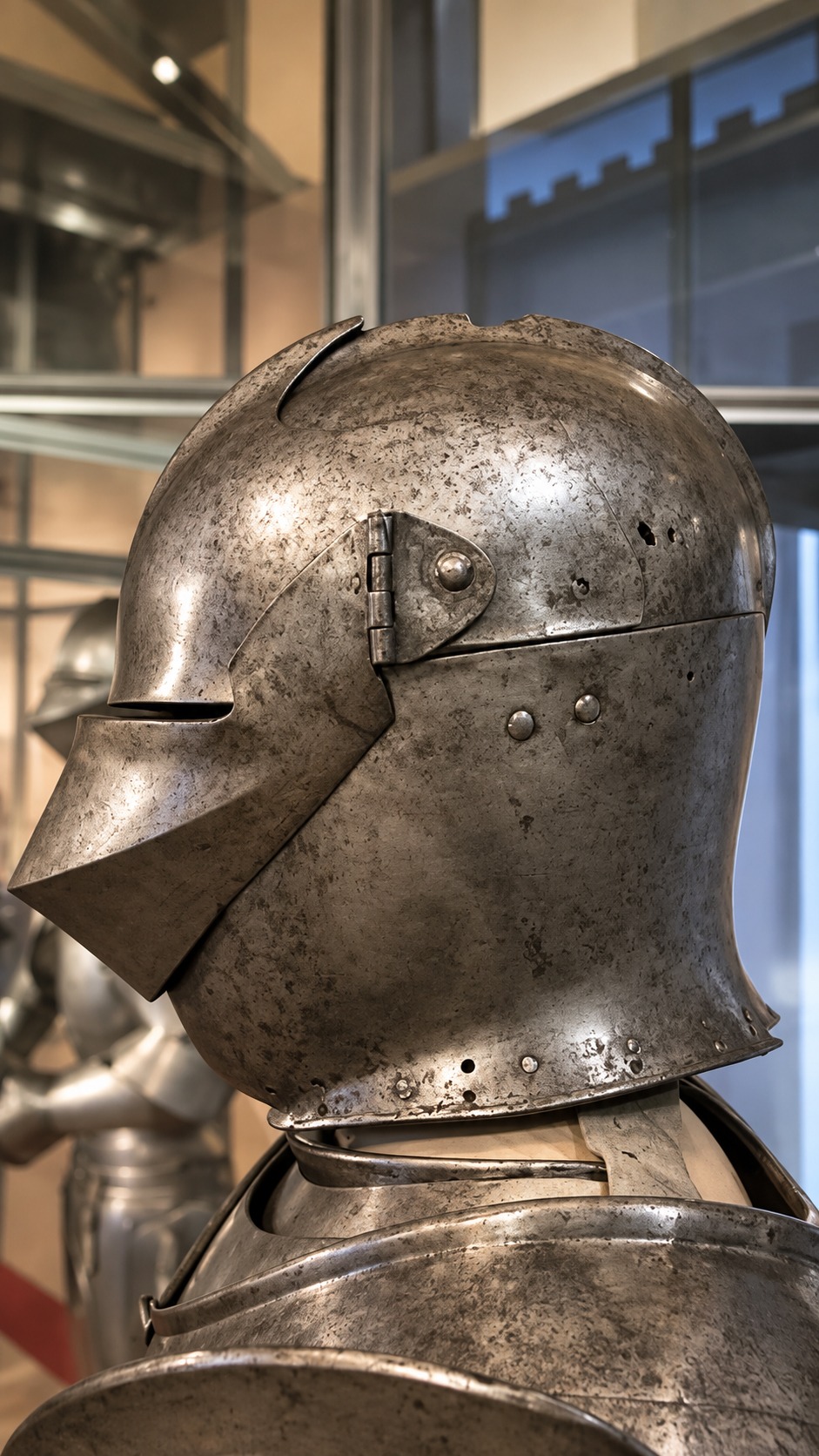
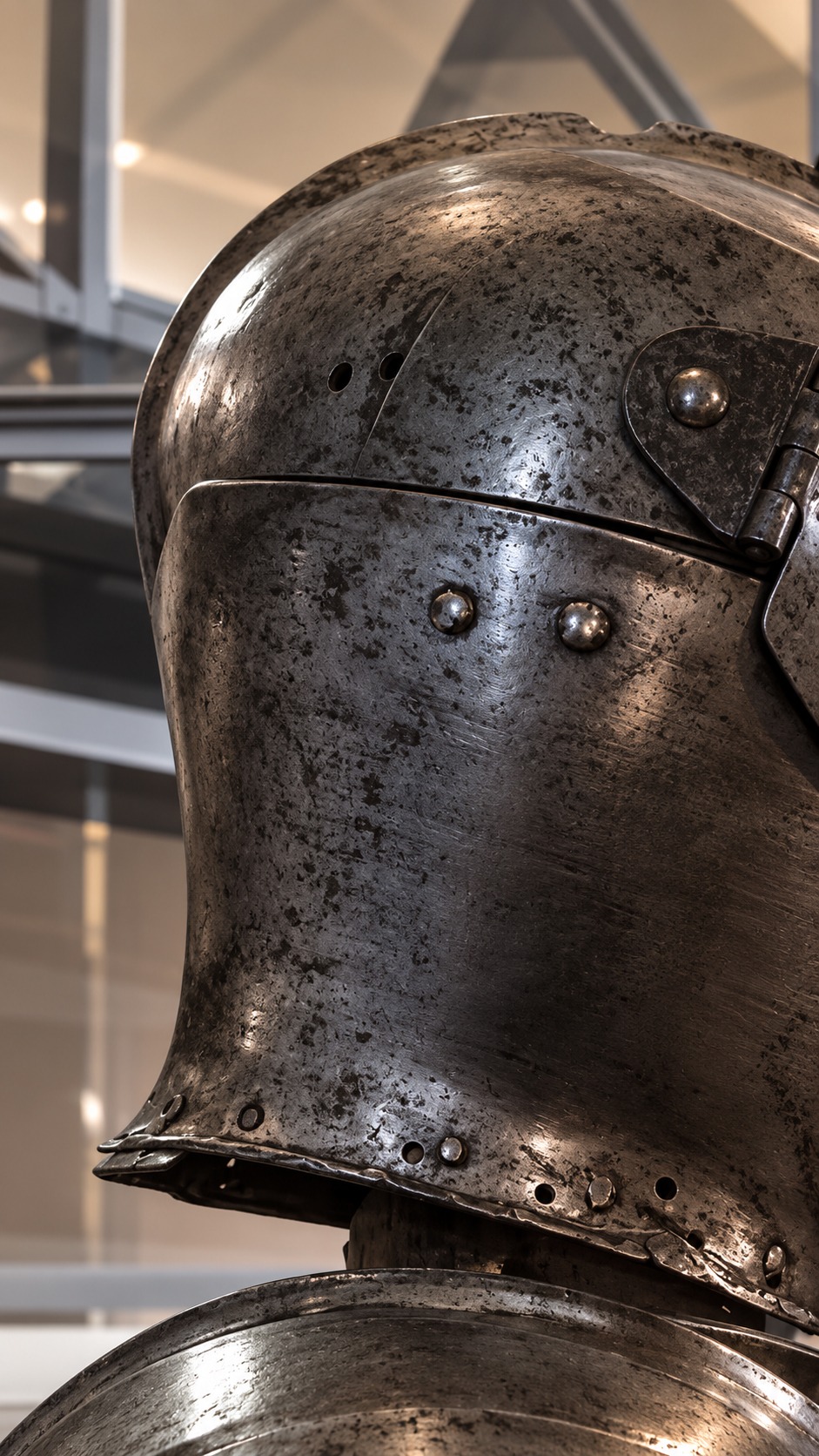
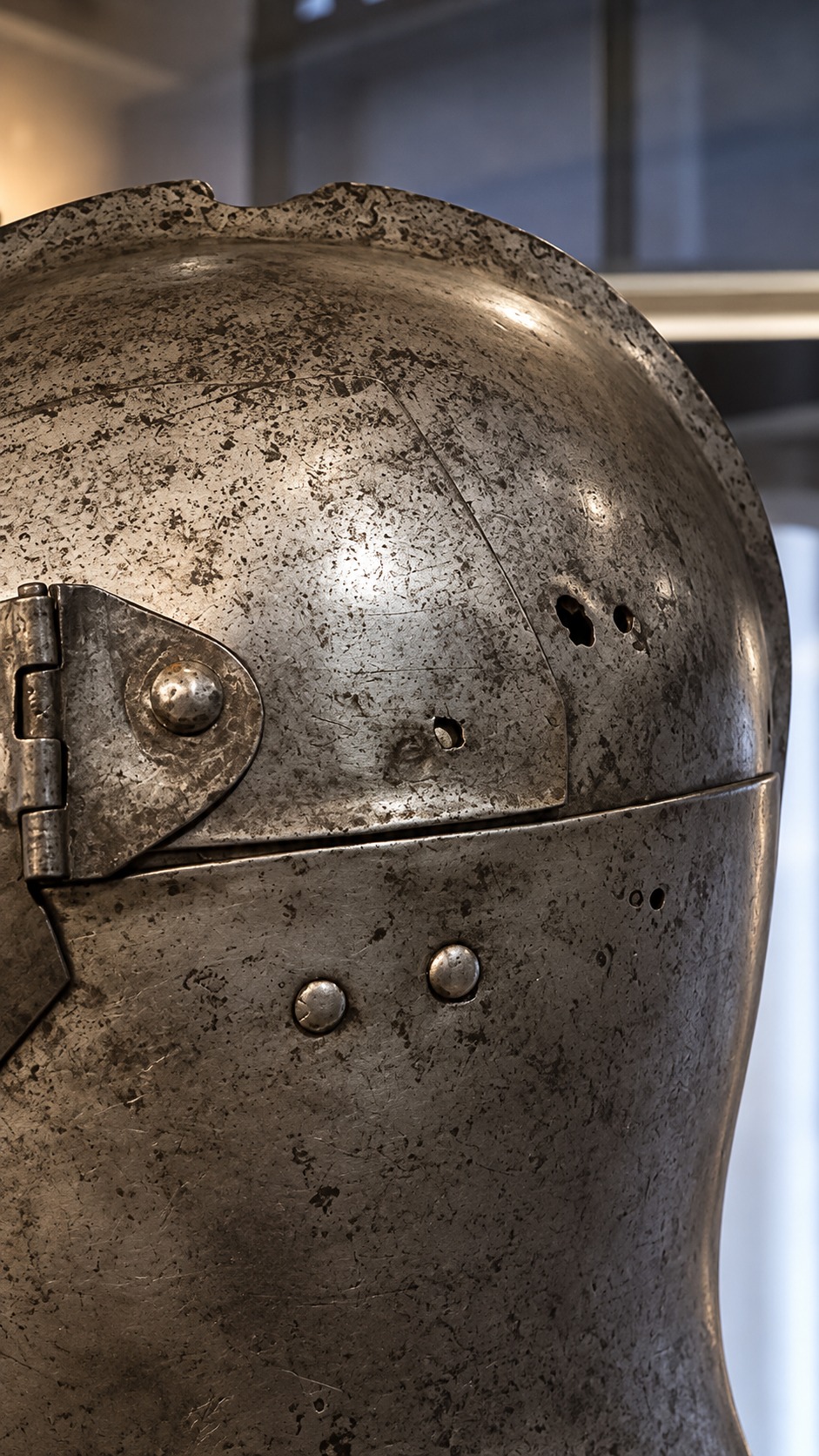
The armet (armet in French and international terminology), also referred to in historical and museum descriptions as a ‘cavalry helmet’, is a type of close helmet developed during the 15th century and closely associated with the evolution of the man-at-arms’ armour.
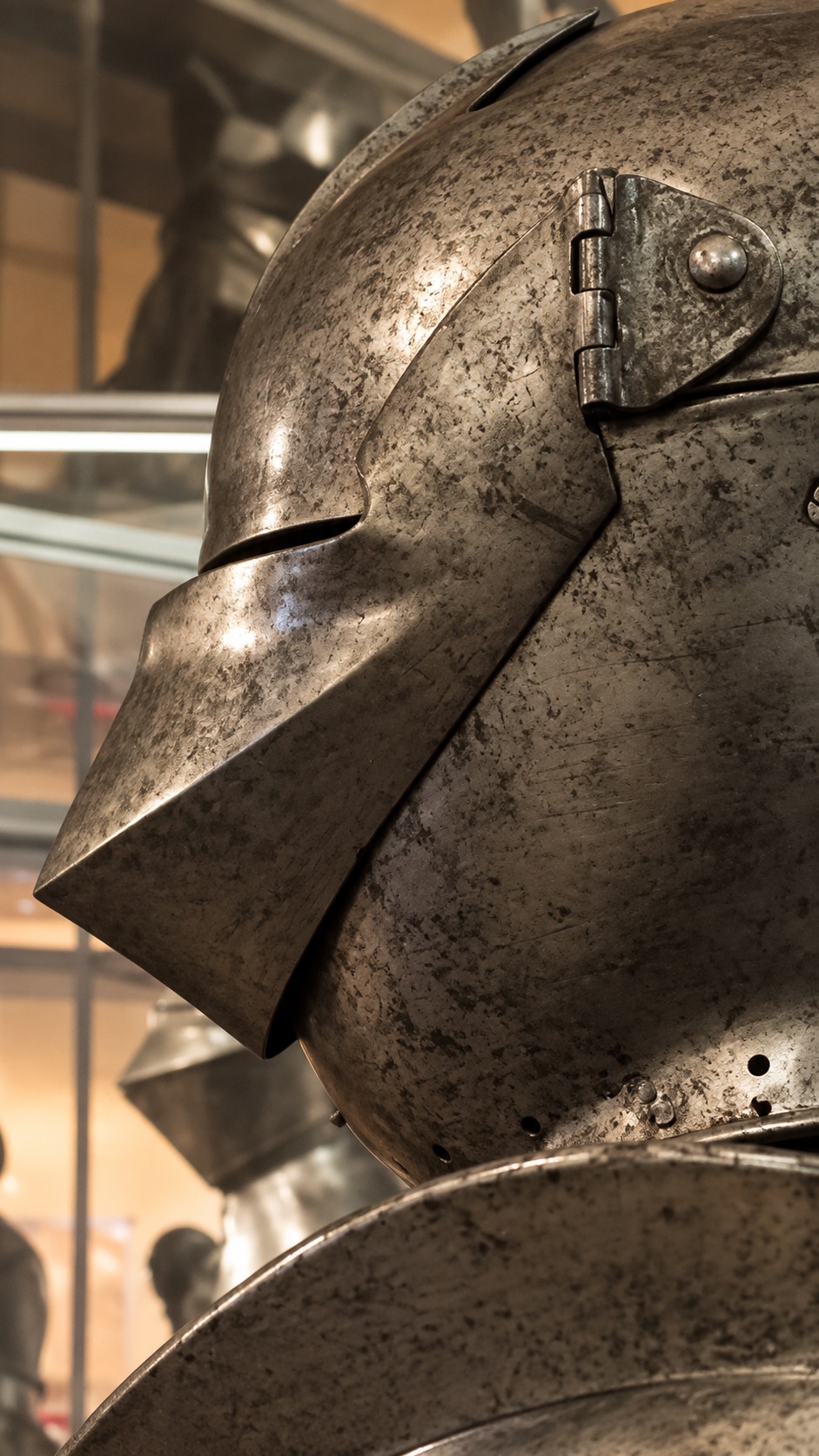
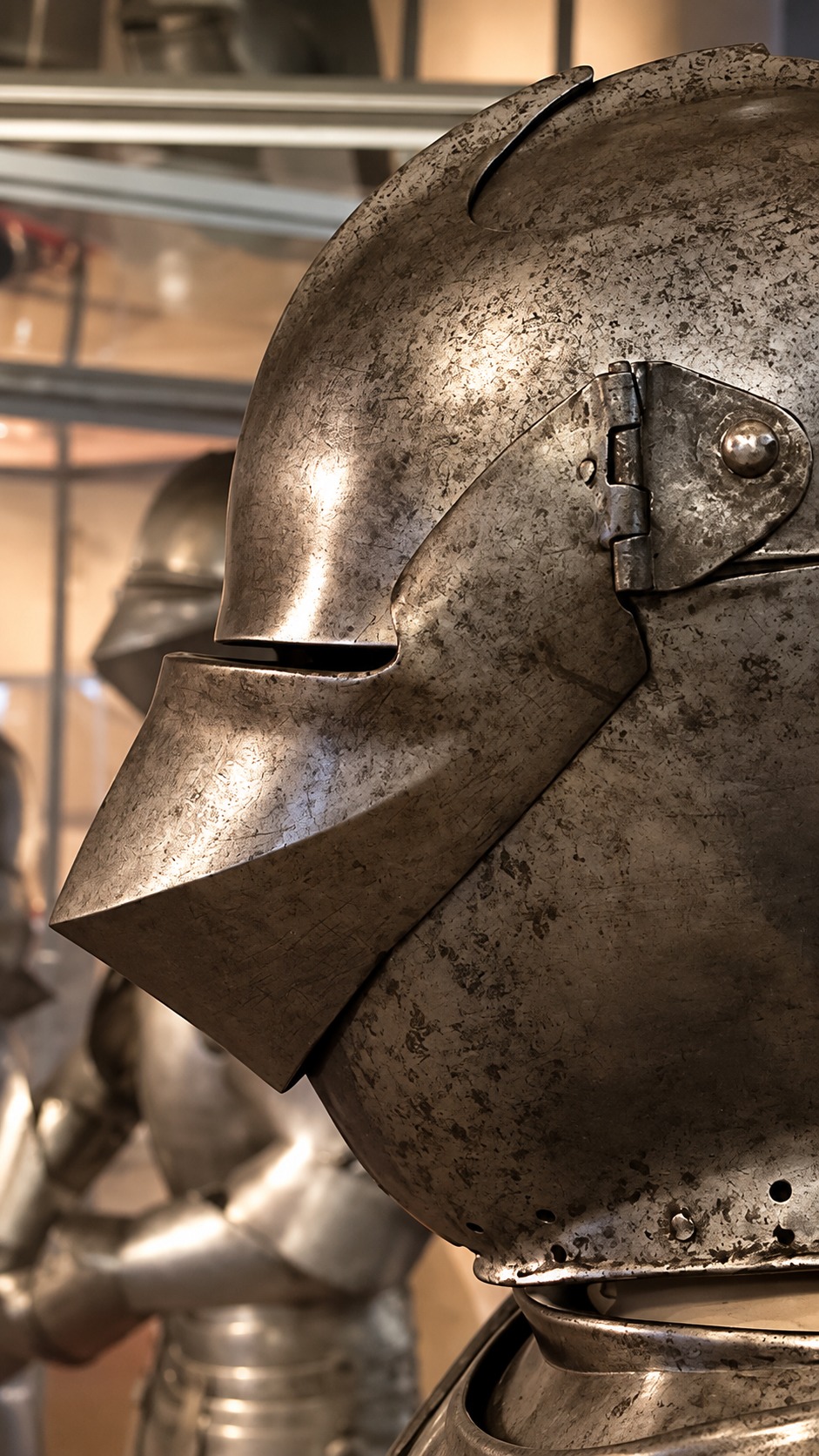
Its construction is characterised by a skull fitting relatively closely to the head, a movable visor and, above all, two hinged cheek-pieces which close around the face and jaw. This system provides complete protection for the head while keeping the helmet compact and allowing it to integrate closely with the defences protecting the neck and upper part of the armour.
In this context, the term ‘cavalry helmet’ describes its use as part of the heavy equipment intended for mounted combat. Armet, by contrast, more precisely identifies the helmet’s particular type of construction.
The example illustrated here forms part of armour B4, originally from the Sanctuary of the Blessed Virgin of the Grazie at Curtatone and now preserved at the Francesco Gonzaga Diocesan Museum in Mantua. The armour is attributable to a Lombard context and can be dated to the last quarter of the 15th century.
Construction and Characteristics
The helmet has a compact, rounded skull to which the lateral cheek-pieces are hinged. These are designed to close around the jaw, while protection for the face is completed by the movable visor.
Its close fit around the head, together with the system of articulated components, is characteristic of the Italian armet of the second half of the 15th century. This arrangement combines the different elements into a compact structure surrounding the head and face.
The surfaces are predominantly plain and lack pronounced decoration. Instead, the form is defined by the shaping of the steel plate and the articulation of the individual components. These features reflect constructional solutions characteristic of Lombard armour-making during the period.
Surface Finish and Conservation Evidence
During conservation, an important detail concerning the helmet’s original appearance emerged when its frontal element was dismantled.
As reported by Lionello Giorgio Boccia¹, a portion of the metal surface that had remained protected from oxidation retained a particularly brilliant finish.
This evidence documents the use of steel finishing and polishing techniques capable of producing surfaces very different from the appearance the metal has acquired today. The original surface may have been carefully smoothed and polished to achieve an almost mirror-like finish.
he B4 armet provides an important material reference for the study of helmet construction, articulation and finishing techniques within the Lombard armour-making tradition during the last quarter of the 15th century.
Photograph by the author for the Instagram profile @quattrocentolab
1. Lionello Giorgio Boccia (1926–1996) as one of Italy’s foremost scholars of historical arms and armour. A specialist in hoplology and, in particular, in Italian and European armour-making from the Middle Ages to the Renaissance, he served as Director of the Stibbert Museum in Florence. His studies of 15th-century Lombard armour remain a fundamental reference for the classification, dating and attribution of Italian armour. In 1982, he published a study specifically devoted to the armour from the Sanctuary of Santa Maria delle Grazie at Curtatone.
Further reading:
BOCCIA, Lionello Giorgio, Le armature di S. Maria delle Grazie di Curtatone di Mantova e l’armatura lombarda del ’400, Busto Arsizio, Bramante, 1982.
BOCCIA, Lionello Giorgio; COELHO, Eduardo Teixeira, L’arte dell’armatura in Italia, Milan, Bramante Editrice, 1967.
RICCADONNA, Alberto; POSIO, Vannozzo, Le armature delle Grazie. Tra storia e leggenda, 2nd revised and expanded edn, Edizioni Chiribella, 2024, ISBN 9788890583520.


